About me
Professional Profile
Professional Profile
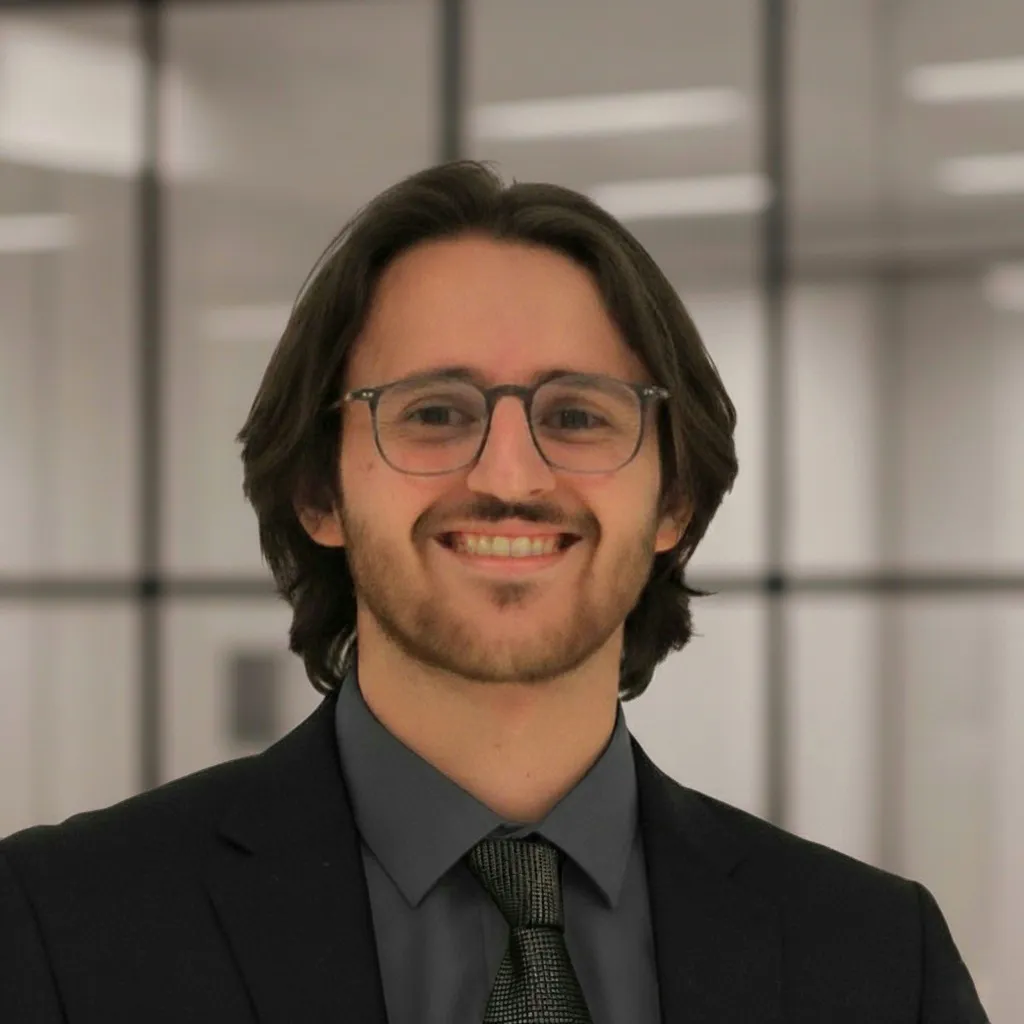
Mechanical engineer specializing in sustainability and energy transition, evolved into a technology leader and developer of advanced software ecosystems. The operational and strategic vision is based on the principle that better companies help shape a better world. The professional goal is the application of artificial intelligence technologies, cloud architectures, and engineering methodologies to optimize business processes, simplify ESG reporting, and increase competitiveness, with a specific focus on SMEs and artisan networks.
Experience
Professional Roles
External collaborator acting as Chief Technology Officer (CTO). Leading the company's tech development and managing development teams (4-8 units). Designing distributed cloud infrastructures (AWS/Scaleway), writing Python backend logic (Django, FastAPI), and integrating complex AI systems for SaaS platforms.
Managed energy efficiency manufacturing projects and sustainability reporting. Teaching on energy transition and LCA. Feasibility studies for renewable energy and heat recovery systems. Developed AI-based systems for ESG data analysis.
Forlì Campus. Managed manufacturing projects (Iveco Group, Parmalat, Philip Morris). Conducted sustainability analysis (VIVACE and LCA), optimized energy consumption, and produced feasibility studies for photovoltaics, thermal recovery, heat pumps, and biomethane.
Portfolio
Selected Projects
Definition of the PaaS infrastructure. Development of the Proof of Concept (POC) and implementation of core technologies for data processing. Coordination and supervision of quality tests to ensure the reliability of the AI model's outputs.
Specialist consultancy for the efficiency improvement and plant transformation of 8 sites, including multi-site energy mapping, consumption profile analysis, targeted efficiency proposals and renewable integration with low-impact technologies.
Project commissioned by the Italian Historic Automobile Club (ASI) to assess the sustainability of historic cars throughout their life cycle. Activities: methodological framework definition, empirical data collection, application of LCA methodology to estimate environmental impacts, calculation of sustainability KPIs, and delivery of a final study for institutional presentation including policy and operational recommendations.
Activity carried out within the Bo‑ESG project (CNA Bologna, Sametica, Nomisma): data retrieval, cleansing and analysis, calculation of VSME KPIs for 4 companies across different supply chains (fashion, plant engineering, mechanical, agro‑industry). Also produced a list of operational and strategic improvement initiatives for each company based on quantitative results.
Design of an AI system applied to Bill of Materials (BOM) and master data analysis. Structuring of a hybrid RAG architecture. Implementation of self-validation mechanisms to eliminate hallucinations and ensure engineering correctness.
ESG management software for SMEs. A tool designed to assist consultants, sustainability managers, and specialists with data aggregation and the automation of sustainability reporting.
Pre-event analysis, live monitoring and final reporting of the 'Start‑Up Day' event sustainability (2025) held at Spazio Dumbo, Bologna. Activities: definition of measurement plan and environmental KPIs, deployment and coordination of on-site monitoring systems with operational staff, real‑time data collection during the event, results processing and preparation of the final report with operational recommendations to reduce impacts.
Project Manager for the implementation of an AI Agent for commercial optimization. Managed the commercial/negotiation phase. Definition of software requirements and integration with legacy systems.
Co-ideation of the sustainability coaching service for associated companies. Developed the dedicated software platform and technical structure of the output report. Strategic contribution to national scaling.
Energy consumption analysis of the Pasturago plant, focusing on the packaging area, defining economic and environmental KPIs, and developing an action plan to improve operational efficiency and reduce consumption.
Energy consumption analysis and decarbonization project: replacing natural gas boilers with an electric heat pump plant paired with photovoltaics. Designed the Room Zero package, with in-room energy monitoring and compensation of residual CO2 emissions.
Project for Macè (Ferrara) focused on general energy analysis and LCA assessment for new products under development. Activities: energy data collection and meter installation, consumption analysis and identification of inefficiencies, application of LCA methodology to evaluate environmental impacts of products in development, and proposal of improvement actions and implementation guidelines.
Pre-event analysis, live monitoring and final reporting of the 'Start‑Up Day' event sustainability (2024) held at Palazzo Re Enzo, Piazza Nettuno, Bologna. Activities: definition of measurement plan and environmental KPIs, deployment and coordination of on-site monitoring systems with operational staff, real‑time data collection during the event, results processing and preparation of the final report with operational recommendations to reduce impacts.
Analysis and sustainability improvement project at Molini Pivetti (Cento). I organized and led the energy analysis of the rolling section — the site's highest energy consumer — including installation and configuration of meters, operational data collection, identification of inefficiencies and definition of corrective actions to reduce consumption and improve plant efficiency.
A B2B software platform designed to facilitate the collection of ESG data and the calculation of sustainability indicators (VSME) for artisans and small businesses. Currently used by Confartigianato to provide the ConfESG - VSME service
Project management for the transition to corporate sustainability (environmental pillar) across 6 phases: training, analysis and measurement, improvement, and digitalization for monitoring and reporting.
TEESI project carried out at Parmalat (PR) and Philip Morris International (BO) plants and later applied to additional industrial sites. Main activities: analysis of sustainability KPIs; application of the ViVACE model for sustainability and circularity assessment; use of LCA methodology for product life-cycle evaluation; development of an AI tool for optimizing corporate energy consumption; feasibility studies for photovoltaic systems, high-temperature heat pumps, anaerobic digesters and Power-to-Gas solutions. Role: research fellow (assegnista di ricerca).
Skills
Tools & Skills
Training
Training Activities
Training module delivered in 2025 within the course 'SUSTAINABILITY AND EFFICIENCY OF PRODUCTION PROCESSES' (Assoform). Contents: measuring and reducing energy demand; technologies for transitioning to renewables; decarbonization strategies and efficiency measures for production processes; tools for monitoring and evaluating intervention effectiveness. Role: instructor/trainer (TURTLE).
Strategic training delivered to secretaries and management of local branches (2025): governance of the ConfESG service, KPI and dashboard interpretation, defining rollout roadmaps, stakeholder engagement channels and alignment with corporate ESG objectives. Role: lecturer/strategic consultant (TURTLE).
Operational training delivered to Confartigianato staff (2025) on using the platform for delivering the ConfESG service: ESG data entry and validation, dashboard monitoring, report generation and service workflows. Hands-on session with exercises on real cases and operational best practices. Role: trainer/operational consultant (TURTLE).
24-hour module within the IFTS course 'Technician for Energy Transition and Corporate Sustainability'. Contents: energy audit methodologies; plant and environmental supervision and monitoring tools; overview of energy consumption across industrial sectors; cost-benefit analysis of efficiency interventions; presentation of company case studies. Role: instructor/specialist consultant (TURTLE).
Course delivered in early 2025 on energy transition, featuring case studies of energy efficiency interventions and demonstration of applying genetic optimization algorithms to BMS (Building Management Systems). Topics: principles of energy transition, analysis of real-world case studies, optimization methods for controlling and reducing consumption in HVAC and BMS systems. Role: instructor/consultant (TURTLE).
Training delivered to Sinfo One (2025) on VSME sustainability indicators and ESRS requirements, with an operational focus on data management and cleansing needed for their calculation, integrating data into management systems, and best practices to ensure metric quality and traceability. Hands‑on activities with real cases and guidance for implementing the workflows into ERP/management software. Role: instructor/trainer and coach (TURTLE).
Lecture delivered within the course 'Industrial Instrumentation' (Bachelor's degree in Mechanical Engineering, University of Bologna, Forlì campus) in 2025. Contents: energy measurement instruments; sensors for consumption monitoring; data acquisition, calibration and validation methods; integration with supervision systems and BMS. Role: lecturer (TURTLE).
Lecture delivered within the master's course 'Sustainable Design for Industrial Plant' (Mechanical Engineering, University of Bologna) in 2025. Topics: energy transition, decarbonization strategies for industrial plants, case studies and technologies for efficiency improvements. Role: lecturer (TURTLE).
Participation as trainer and coach in the 'Salotto Energia' mini‑master (2025), a UniCredit ESG initiative in partnership with Turtle for 35 Emilia-Romagna SMEs. Activities: workshops on ESG measurement and sustainability KPIs; focus on energy costs and intervention areas to reduce consumption; support in producing simplified ESG Reports and company coaching for operational and strategic measures. Role: trainer/coach (TURTLE).
Module delivered within the course 'SOFTWARE PER LA PROGETTAZIONE DI SERVIZI AMBIENTALI' (Assoform) in 2024. Contents: measuring and reducing energy demand; technologies for transitioning to renewables; tools and methods for energy monitoring; use of software for designing environmental services and assessing intervention effectiveness. Role: instructor/trainer (TURTLE).
Training module delivered within the course 'New business models and new technologies supporting the circular economy' (FAV). Contents: introduction to LCA methodology; methodological approach and life-cycle analysis phases; key indicators and results interpretation; practical examples and case studies; implications for circular design and business decision-making. The module was repeated once more in the same year (2024). Role: instructor/trainer (TURTLE).
Training module on energy transition delivered at Minipress S.r.l. (Bologna) in 2024. Contents: overview of energy sources, decarbonization strategies, energy efficiency measures and monitoring; practical examples for the manufacturing sector. Role: instructor/trainer (TURTLE).
Lectures delivered within the IFTS course 'Technician for Energy Transition' (November 2024). Three practical sessions of 4 hours each: 4/11 — Planning, development and monitoring of energy efficiency projects; isolated and grid-connected systems; sizing and siting of PV systems; technical, architectural and economic aspects. 8/11 — Building a business plan for energy improvement measures; drivers and economic-financial monitoring indicators; sector case studies on adoption of green innovations and their impact on economic performance. 15/11 — Cost-benefit analysis indicators (NPV, Cost of Conserved Energy), BAT and an example profit-and-loss statement for an industrial energy efficiency measure. Role: instructor/trainer (TURTLE).
Lecture delivered within the master's course 'Sustainable Design for Industrial Plant' (Mechanical Engineering, University of Bologna). Topics covered: energy transition, decarbonization strategies for industrial plants, case studies on efficiency interventions and enabling technologies. Role: lecturer (TURTLE).
Specialist course delivered to Unicredit's ESG team (2024) on fossil fuels, energy transition and the EU taxonomy. Topics covered: impacts of fossil fuels on transition risk and decarbonization strategies; tools and approaches for energy transition; EU Taxonomy criteria for economic activities and implications for reporting and financial risk; case discussions and operational guidance. The course was repeated both at the beginning and at the end of the year (2024). Role: instructor/trainer (TURTLE).
Vivace training module (Module 3) delivered at Valpharma International in 2024. Title: 'Energy Transition – Part 1'. Contents: fossil energy sources, renewable energy sources and an overview of the energy market; implications for corporate transition strategies and introductory design elements for interventions. Role: instructor/trainer (TURTLE).
Education
Academic Background
100/100.
110/110 with Honors.
104/110.